
Learning English in Mauritania : Obstacles and advantages
Article Sidebar
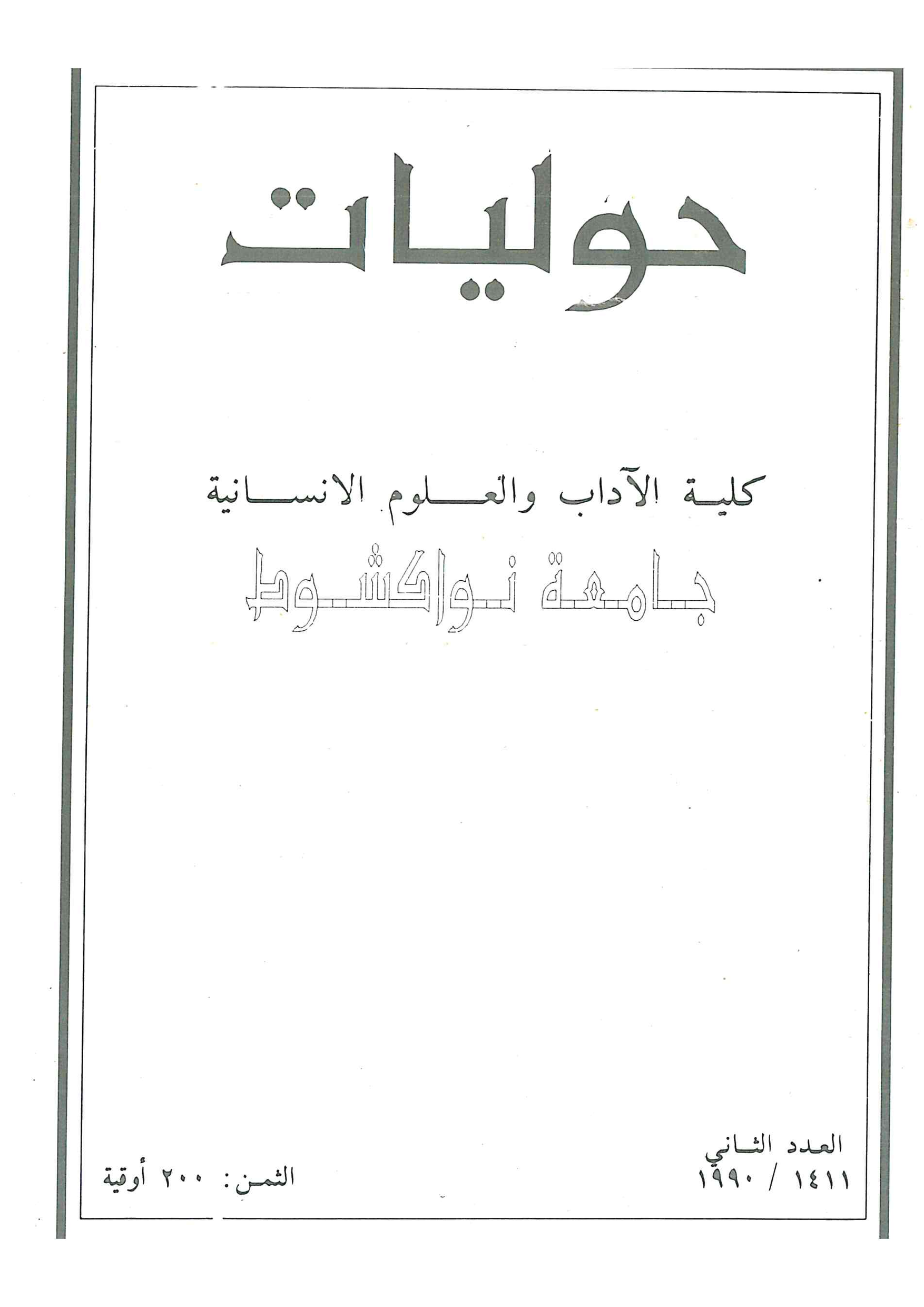
Main Article Content
Abstract
The article examines the main obstacles and advantages encountered by Mauritanians learning English. It explains that language learning is complicated by differences in cultural experience, patterns of thought, grammatical structure, idiomatic expression, spelling, and pronunciation. Some realities expressed by English vocabulary may be unfamiliar within the Mauritanian cultural and religious environment, while differences between Arabic and English affect tense, syntax, and the organization of events. Nevertheless, knowledge of French can facilitate the acquisition of a considerable part of English vocabulary and certain linguistic structures. The article also emphasizes the international expansion of English and its importance in trade, employment, scientific research, technology, and access to Anglo-Saxon literature and culture. It concludes that English has become a practical necessity, although translation cannot fully preserve the distinctive literary and musical qualities of works written in their original language (*).
Article Details

This work is licensed under a Creative Commons Attribution 4.0 International License.
Authors retain copyright in their work and grant the Annals of the Faculty of Arts and Humanities the right of first publication. Articles are published under the Creative Commons Attribution 4.0 International License (CC BY 4.0), which permits the use, distribution, reproduction, and adaptation of the work, provided that appropriate credit is given to the author, the original publication in the journal is acknowledged, and any changes made are indicated.